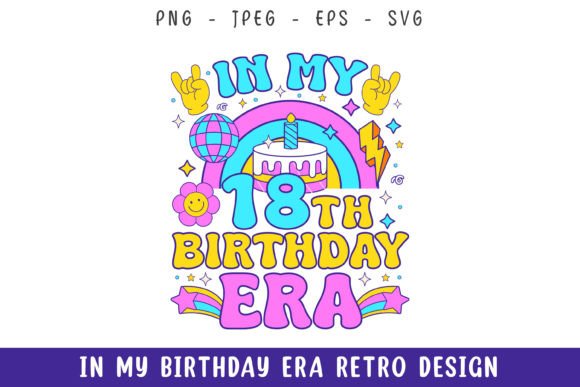
In My 18th Birthday Era Groovy Retro Svg Review
When I sit down to evaluate a new digital asset for my embroidery studio, I am rarely looking for just another pretty picture. I am looking for viability. Can this design hold up under the tension of an embroidery machine? Will it translate well from a flat screen to three-dimensional fabric? Does it have enough visual weight to justify the labor cost in a finished product? These are the questions that determine whether a file ends up in my "archive" folder or on a customer’s sweatshirt.
Recently, I pulled In My 18th Birthday Era Groovy Retro Svg into my workflow with a specific project in mind: a batch of custom birthday gifts for a local boutique’s upcoming summer sale. The brief was simple but demanding—something nostalgic, trendy, and versatile enough for both dark and light apparel. After running several test stitches and analyzing the vector structure, here is my honest assessment of how this design performs in real-world application.
First Impressions and Visual Personality
The moment you load the file, the mood is immediately established. This isn’t subtle minimalist line art; it is bold, retro, and unapologetically fun. The typography associated with the "In My [Age] Era" trend has become a staple in modern streetwear, and this iteration leans heavily into the groovy aesthetic. For an embroidery designer, the immediate concern is always legibility. When a design relies on thick, curved lettering, the risk of thread breaks or puckering increases if the stitch density isn't managed correctly.
In My 18th Birthday Era Groovy Retro Svg strikes a balance. The curves are smooth, suggesting that when converted to stitches, the satin edges should remain crisp without excessive trimming. The visual personality screams "celebration," making it naturally suited for milestone events. It feels less like a generic clipart image and more like a deliberate graphic design choice. This matters because customers who buy handmade embroidered goods are often paying for that sense of curated style. A design that looks like it belongs on a vintage concert poster carries more perceived value than one that looks like it was generated by a basic font generator.
Real-World Application: From Screen to Stitch
I tested this design across a variety of substrates to see where it truly shines. The most successful application was undoubtedly on heavyweight cotton blends for custom sweatshirts and tote bags. The retro theme aligns perfectly with the texture of these materials. When stitched onto a heather grey tote bag, the groovy elements popped against the fabric grain, creating a tactile experience that flat prints simply cannot match.
For small business owners and Etsy sellers, versatility is key. One of the strongest selling points mentioned in the product details is the ability to easily change colors for dark versus light t-shirts. In practice, this means you can use the same master file for two distinct market segments. On a white tee, a darker thread palette gives a sharp, high-contrast look that reads as premium. On a black tee, switching to lighter or metallic threads creates a vibrant, eye-catching effect that appeals to younger demographics celebrating their 18th birthday—a significant milestone that often calls for something special rather than plain.
I also considered its potential for baby items and nursery decor. While the "18th" aspect obviously excludes infants, the retro groovy style is timeless. If adapted for other ages, such as a first birthday or sweet sixteen, the design could work beautifully on bibs, burp cloths, or pillow covers. However, for the specific 18th birthday context, it fits best on apparel, aprons, and perhaps even decorative patches for denim jackets. The design assets are robust enough to handle the wear and tear associated with daily-use items like kitchen towels or caps, provided they are stabilized correctly.
Where Caution Is Required
No design is perfect for every scenario, and In My 18th Birthday Era Groovy Retro Svg is no exception. There are specific situations where I would advise proceeding with caution. First, avoid using this on highly textured fabrics like heavy boucle wool or loose-weave linen without a substantial stabilizer backing. The groovy curves may get lost in the fabric noise, resulting in a muddy appearance.
Secondly, be mindful of hoop size limitations. If you attempt to digitize or stitch this at a very small scale, such as on a standard baseball cap front panel or a tiny patch, the fine details of the retro styling might not render clearly. Satin stitch on tight curves requires sufficient width to lay flat. If the design is scaled down too much, the stitches will compete with each other, leading to bulkiness and potential distortion. Always check the stitch density before committing to production. If the file allows for easy modification, consider simplifying some of the inner details for smaller applications.
Stretchy fabrics present another challenge. While jersey knit works well for t-shirts, the tension of the embroidery process can cause the garment to pucker around the design area. Because this design features large areas of fill or dense text, it exerts significant pull on the fabric. Using a cut-away stabilizer is non-negotiable here to maintain the integrity of the finished product over time, especially since birthday gifts are often washed frequently.
Impact on Brand and Customer Trust
From a commercial standpoint, the quality of your embroidery directly impacts customer trust. A poorly executed design can make a brand look amateurish, while a clean, well-placed stitch job signals professionalism. In My 18th Birthday Era Groovy Retro Svg, when executed correctly, enhances the perceived value of handmade products. It suggests that the seller understands current trends and knows how to apply them technically.
For craft fair vendors and boutique branding, this design offers strong recognition value. The "Era" concept is highly shareable on social media. Customers love to photograph their personalized gifts, and a bold, retro design stands out in photos. This organic marketing potential is invaluable for digital product sellers and physical makers alike. When buyers see a clean, professional finish on a groovy design, they are more likely to return for future purchases, such as holiday embroidery projects or wedding gifts.
Practical Designer Notes for Implementation
If you decide to incorporate this design into your craft business or personal projects, follow these practical steps to ensure success:
- Test on Scrap Fabric: Never run a full production order without a test stitch. Use scrap pieces of the actual fabric you plan to sell. This reveals how the thread interacts with the material and helps you adjust tension settings.
- Check Thread Color Contrast: As noted in the description, changing colors is easy. Test both light and dark palettes on your target fabric to ensure maximum readability. High contrast usually yields the best results for retro styles.
- Inspect Small Details: Zoom in on the digital file before stitching. Look for any overlapping paths or thin lines that might cause needle strikes to fail. If the file is an SVG, verify that the paths are closed and clean.
- Use Proper Stabilizer: For stretchy fabrics like t-shirts and caps, a cut-away stabilizer is essential. For woven fabrics like tote bags and aprons, a tear-away or wash-away stabilizer may suffice, depending on the desired hand feel.
- Confirm Licensing: Before selling finished items or using this as part of a larger commercial embroidery package, double-check the license terms. Ensure you have the right to sell physical goods made from the design.
- Create Printable Mockups: Even if you are selling the physical item, having high-quality mockups for your Etsy listing or online shop is crucial. Show the design on different garments to help customers visualize the final product.
In conclusion, In My 18th Birthday Era Groovy Retro Svg is a strong candidate for designers looking to add timely, high-demand items to their inventory. It balances aesthetic appeal with technical feasibility, making it suitable for a wide range of custom apparel and personalized gifts. By respecting its limitations regarding fabric type and scale, you can create professional, profitable finished products that resonate with customers celebrating life’s milestones.